

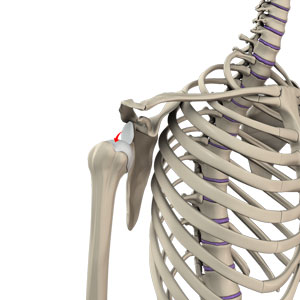
Shoulder dislocation is the common first-time presentation of shoulder instability. Dislocations occur when the humeral head is forced completely out of the glenoid socket. In a shoulder subluxation, the head of the humerus slips or is partially displaced from its normal position in the glenoid.
Extreme force that impacts the joint can force the arm outward, upward, or backward, causing the shoulder to dislocate. Dislocations can occur from a fall, direct blow to the shoulder, or twisting of the arm and often occur during sports. They may result in rotator cuff tears, labral tears, and even fractures of the shoulder.
- Severe pain
- Bruising and swelling
- Inability to move the joint
- Muscle spasms
- Deformity or abnormal appearance of the shoulder
- Numbness/tingling and weakness
Immediate treatment involves reduction, which involves repositioning the humeral head back into the glenoid socket. This can be performed on the field or in the emergency room. Pain management, immobilization, and rehabilitation exercises follow to restore function and strength.
Recurrent shoulder instability is characterized by the shoulder joint’s inability to maintain the ball in its socket. This occurs as a result of repeated recurrent dislocations or subluxations. This condition can significantly impact an individual’s ability to perform daily activities and maintain an active lifestyle.
Causes of shoulder instability include:
- Traumatic injuries leading to a repeat dislocation
- Young patients under the age of 20-25 are much more likely to have a repeat dislocation than older patients.
- Excessive flexibility or looseness in ligaments that naturally hold the joint together
Treatment aims at restoring stability to the shoulder. This may involve:
- Physical therapy to strengthen the shoulder muscles, which are dynamic stabilizers of the shoulder
- Activity modification to avoid movements that could cause the shoulder to dislocate
- Surgical intervention to repair damaged ligaments and tighten the joint capsule
Shoulder instability requires a comprehensive management approach involving initial acute care, rehabilitation, and, in some cases, surgical intervention to prevent recurrence and ensure the functional integrity of the shoulder joint. Advanced imaging techniques such as MRI can be helpful in assessing the extent of injury and guiding treatment.
If you’re dealing with shoulder instability, book an appointment with the board-certified shoulder surgeons at UCSF Women’s Sports Medicine Center. As a premier provider of sports medicine in the Bay Area, UCSF delivers customized care plans to restore shoulder stability and prevent future injuries. Visit one of their convenient locations in San Francisco, Berkeley, or Redwood City.
References
- https://orthoinfo.aaos.org/en/diseases–conditions/dislocated-shoulder/
- Rawal A, Eckers F, Lee OSH, Hochreiter B, Wang KK, Ek ET. Current Evidence Regarding Shoulder Instability in the Paediatric and Adolescent Population. J Clin Med. 2024 Jan 26;13(3):724. doi: 10.3390/jcm13030724. PMID: 38337418; PMCID: PMC10856087.
- Stokes DJ, McCarthy TP, Frank RM. Physical Therapy for the Treatment of Shoulder Instability. Phys Med Rehabil Clin N Am. 2023 May;34(2):393-408. doi: 10.1016/j.pmr.2022.12.006. Epub 2023 Feb 26. PMID: 37003660.
- Tokish, John M. MD. Shoulder Instability. Sports Medicine and Arthroscopy Review 28(4):p 121, December 2020. | DOI: 10.1097/JSA.0000000000000295
If you wish to be advised on the most appropriate treatment, please call to schedule an appointment.